High spatial frequency signals drive emotion-related perceptual decision making under emotion-guided attention
摘要
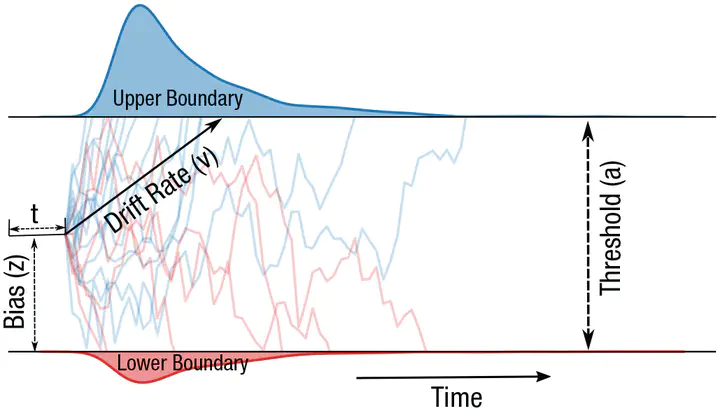
How we detect and perceive threats and other emotional objects has long been a central theme in affective science research. Recent studies have emphasized that top-down, emotion-guided attention impacts perceptual decision making of emotional stimuli. While the influential low road hypothesis proposes spatial frequency (SF) being an important factor in threat detection, a crucial outstanding question is how emotional information-carried in different SF signals-is processed in perceptual decision making under emotion-guided attention. Over a series of five experiments, we measured participants’ (N = 219) emotion-related decision making, examining the interaction of top-down (attention) and bottom-up (emotion expression, and SF) factors. Results showed there was significantly better performance in detecting high (H)SF compared to low (L)SF fearful targets under emotion-guided attention; this pattern also emerged for happy target detection. However, in a gender-identification task, better performance for HSF fearful stimuli was not observed. Drift diffusion modeling revealed that emotion-guided attention enhanced the evidence accumulation for HSF compared to LSF information. These results support the notion that while the fast low road may be responsible for allowing threat to capture our attention in a bottom-up manner, detailed information beyond the low road may be more efficient in driving top-down-guided identification of the threatening or emotional object. Findings from this series of experiments indicate the potentially context-dependent functions of bottom-up and top-down factors in threat detection and perception as well as emotion perception in general.