Chuan-Peng Lab
Chuan-Peng Lab
Home
Team
Publications
Collaborators
Blog Posts
Contact
Join Us
Light
Dark
Automatic
English
中文 (简体)
2
Questionnaire Data From the Revision of a Chinese Version of Free Will and Determinism Plus Scale
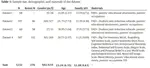
We reported a questionnaire dataset accumulated from the revision of a Chinese version of Free Will and Determinism Scale Plus (FAD+). In this dataset, we collected data from 1232 participants.
Liu, Q
,
Wang, F
,
Yan, W
,
Peng, K
,
Sui, J
,
Hu C-P
Cite
DOI
The Network Structure of Adolescent Well-Being Traits:Results From a Large-Scale Chinese Sample
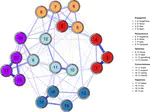
Background: The mental health and well-being of adolescents are becoming increasingly important globally. Understanding the relationship between different aspects of well-being is crucial for effective interventions of the well-being of adolescents.
Zeng, G
,
Peng, K
,
Hu C-P
Cite
DOI
Socioeconomic status and brain structure and functions:A critical review
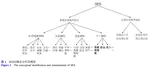
The socioeconomic status (SES) of individuals has an enormous impact on their mental health (e.g., cognitive function and emotional well-being).
Lyu, Z
,
Peng, K
,
Hu C-P
Cite
DOI
Calculating Confidence Intervals of Cohen's d and Eta-squared:A Practical Primer
The recent replication crisis in psychology has motivated many researchers to reform the methods they used in research, reporting effect sizes (ES) and their confidence intervals (CIs) becomes a new standard in mainstream journals.
Wang, J
,
Song, Q
,
Xu, Y
,
Jia, B
,
Hu C-P
Cite
DOI
Kama muta:Conceptualizing and measuring the experience often labelled being moved across 19 nations and 15 languages
English-speakers sometimes say that they feel “moved to tears,” “emotionally touched,” “stirred,” or that something “warmed their heart;” other languages use similar passive contact metaphors to refer to an affective state.
Zickfeld, JH
,
Schubert, TW
,
Seibt, B
,
... Hu C-P
,
... Fiske, AP
Cite
DOI
Data from the Human Penguin Project, a cross-national dataset testing social thermoregulation principles
In the Human Penguin Project (N = 1755), 15 research groups from 12 countries collected body temperature, demographic variables, social network indices, seven widely-used psychological scales and two newly developed questionnaires (the Social Thermoregulation and Risk Avoidance Questionnaire (STRAQ-1) and the Kama Muta Frequency Scale (KAMF)).
Hu C-P
,
Yin, J-X
,
Lindenberg, SM
,
Dalğar, İ
,
Weissgerber, S
,
... Ijzerman, H
Cite
DOI
Neuroscience bias:Reproducibility and exploration of psychological mechanisms
Behavioral and neuroscientific methods have uniquely contributed to our understanding of human mind and behavior. The advance in neuroscience and its potential implications (e.g., in legal systems) have attracted attention from both academia and society.
Yin, J
,
Hu C-P
Cite
DOI
Multinomial Processing Tree Models and Their Application in Social Psychology
Understanding psychological processes and mechanisms behind social behaviours is one of the most important goals of social psychology. Psychologists have proposed many theoretical models to explain people’s social behaviours. It is still, however, difficult to quantify the contribution of hypothesized psychological processes to a specific behaviour. Recently, social psychologist introduced multinomial processing tree (MPT) models to address this problem.
Liu, Y
,
Ding, Y
,
Peng, K
,
Hu, C
Cite
DOI
The Human Penguin Project:Climate, Social Integration, and Core Body Temperature
Social thermoregulation theory posits that modern human relationships are pleisiomorphically organized around body temperature regulation.
IJzerman H
,
Lindenberg, SM
,
Dalğar, İ
,
Weissgerber, S
,
... Hu C-P
,
... Zickfeld, J
Cite
DOI
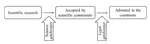
Open Science as a Better Gatekeeper for Science and Society:A Perspective from Neurolaw
Results from cognitive neuroscience have been cited as evidence in courtrooms around the world, and their admissibility has been a challenge for the legal system.
Hu C-P
,
Jiang, X
,
Jeffrey R
,
Zuo X-N
Cite
DOI
«
»
Cite
×