Chuan-Peng Lab
Chuan-Peng Lab
Home
Team
Publications
Collaborators
Blog Posts
Contact
Join Us
Light
Dark
Automatic
English
中文 (简体)
2
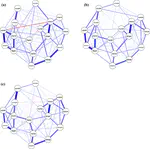
Changes in the Network Structure of Post-traumatic Stress Disorder Symptoms Among Earthquake Exposed Adolescents in China:A 2-Year Longitudinal Study
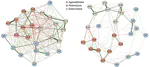
Despite considerable studies focused on the symptoms of posttraumatic stress disorder (PTSD), little is understood about how symptoms of PTSD naturalistically change over time.
An, Y
,
Hu C-P
,
Zhao, J
,
Chen, Y
,
Wu, X
Cite
DOI
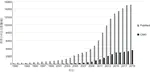
A standardized checklist on meta-analysis reporting in the open science era
Meta-analysis is a crucial tool for accumulating evidence in basic and applied research. In the open science era, meta-analysis becomes an important way for integrating open data from different sources.
Liu, Y
,
Cheng, S
,
Fan, F
,
Di, X
,
Fan, H
,
Feng, C
,
Zuo X-N
,
... XiNian ZUO
,
Hu C-P
Cite
DOI
The Open Brain Consent:Informing research participants and obtaining consent to share brain imaging data
Having the means to share research data openly is essential to modern science. For human research, a key aspect in this endeavor is obtaining consent from participants, not just to take part in a study, which is a basic ethical principle, but also to share their data with the scientific community.
Bannier, E
,
Barker, G
,
... Borghesani
,
Hu C-P
,
... Zhu, H
Cite
DOI
Interpreting nonsignificant results:A quantitative investigation based on 500 Chinese psychological research
Nonsignificant results are common in psychological research and can be easily misinterpreted as evidence for accepting null hypothesis. This misinterpretation may lead to false statistical inferences in empirical research.
Wang, J
,
Song, Q
,
Xu, Y
,
Jia, B
,
Lu, C
,
Chen, X
,
... Hu C-P
Cite
DOI
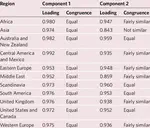
To which world regions does the valence–dominance model of social perception apply?
Over the past 10 years, Oosterhof and Todorov’s valence–dominance model has emerged as the most prominent account of how people evaluate faces on social dimensions. In this model, two dimensions (valence and dominance) underpin social judgements of faces.
Jones, B C
,
DeBruine, L
,
Flake, J K
,
... Hu C-P
,
... Chartier, C
Cite
DOI
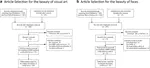
Seeking the beauty center in the brain:A meta-analysis of fMRI studies of beautiful human faces and visual art
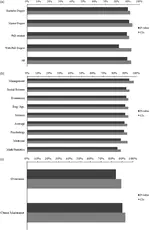
During the past two decades, cognitive neuroscientists have sought to elucidate the common neural basis of the experience of beauty.
Chuan-Peng, H
,
Huang, Y
,
Eickhoff, S. B
,
Peng, K
,
Sui, J
Cite
DOI
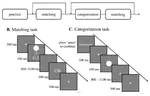
Good me bad me:Does valence influence self-prioritization during perceptual decision-making?
People display systematic priorities to self-related stimuli. As the self is not a unified entity however, it remains unclear which aspects of the self are crucial to producing this stimulus prioritization.
Hu C-P
,
Lan, Y
,
Macrae, CN
,
Sui, J
Cite
DOI
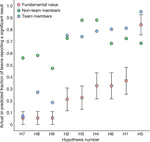
Variability in the analysis of a single neuroimaging dataset by many teams
Data analysis workflows in many scientific domains have become increasingly complex and flexible. Here we assess the effect of this flexibility on the results of functional magnetic resonance imaging by asking 70 independent teams to analyse the same dataset, testing the same 9 ex-ante hypotheses1.
Botvinik-Nezer, R
,
Holzmeister, F
,
Camerer, CF
,
... Hu C-P
,
... Schonberg, T
Cite
DOI
Beyond psychology:prevalence of p value and confidence interval misinterpretation across different fields
P values and confidence intervals (CIs) are the most widely used statistical indices in scientific literature. Several surveys have revealed that these two indices are generally misunderstood.
Lyu, X
,
Xu, Y
,
Zhao, X
,
Zuo, X
,
Hu C-P
Cite
DOI
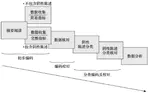
Network analysis and its applications in psychology
Network analysis models (or Network Psychometrics) have been widely used in psychology research in recent years. Unlike latent variable models which conceive observable variables as outcomes of unobservable latent factors, network analysis models apply the graph theory to construct a network to depict the associations among observable variables.
Cai, Y
,
Dong, S
,
Yuan, S
,
Hu C-P
Cite
DOI
«
»
Cite
×