Chuan-Peng Lab
Chuan-Peng Lab
Home
Team
Publications
Collaborators
Blog Posts
Contact
Join Us
Light
Dark
Automatic
English
中文 (简体)
2
A ventral striatal learning signal reflecting individual differences in the success of fear extinction
Individual differences in fear extinction learning are centrally involved in anxiety vulnerability. We here investigate individual extinction differences using a model-free, data-driven approach, by applying Latent Class Growth Modeling (LCGM) to four in-house data sets.
Andres, Elena
,
Hu, Chuan-Peng
,
Tüscher, Oliver
,
Kalisch, Raffael
Cite
DOI
How sleeping minds decide: State-specific reconfigurations of lexical decision-making
Sleep has traditionally been conceptualized as a state of cognitive disconnection, yet emerging evidence indicates that decision-making capacities persist across sleep stages. Here, we elucidate the computational mechanisms underlying real-time lexical decision-making during polysomnographically-verified sleep.
Xia, Tao
,
Hu, Chuan-Peng
,
Türker, Basak
,
Musat, Esteban Munoz
,
Naccache, Lionel
,
Arnulf, Isabelle
,
Oudiette, Delphine
,
Hu, Xiaoqing
Cite
DOI
High spatial frequency signals drive emotion-related perceptual decision making under emotion-guided attention
How we detect and perceive threats and other emotional objects has long been a central theme in affective science research.
Ramesh Ramchand Karnani
,
Friederike Elisabeth Hedley
,
Gabriella Imbriano
,
Mun Lam
,
Cameron van Breda
,
Hu, Chuan-Peng
,
Sing-Hang Cheung
,
Jingwen Jin
PDF
Cite
DOI
Measurement reliability of cognitive tasks: current trends and future directions (in Chinese)
Cognitive tasks are core tools in cognitive science and neuroscience. Their low reliability in capturing individual differences, the so-called “reliability paradox,” poses a critical challenge for individual-level inference.
Pengpeng Zhu
,
Zheng Liu
,
Chunhua Kang
,
Chuan-Peng, Hu
Cite
Project
DOI
Theoretical Foundation of the Drift Diffusion Model and Its Appropriate Application Path (in Chinese)
Click the Cite button above to demo the feature to enable visitors to import publication metadata into their reference management software.
Qihui Wang
,
Ziwei Ren
,
Chuan-Peng, Hu
,
Yiwen Wang
Cite
Project
Source Document
DOI
Reflections on Implementing Open Science in Sport and Exercise Science in China: Theoretical Framework and Practical Path (in Chinese)
Click the Cite button above to demo the feature to enable visitors to import publication metadata into their reference management software.
Gaoxia Wei
,
Likun Gai
,
Chuan-Peng, Hu
,
Xuan Lin
Cite
DOI
An Extended Chinese Social Evaluative Word List
Social evaluation, i.e., people’s views of self, others, and groups, is ubiquitous and embedded in our language. In turn, social …
Lulu Li
,
Qingrong Cheng
,
Hu, Chuan-Peng
PDF
Cite
Code
Dataset
DOI
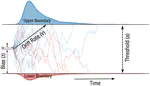
dockerHDDM: A User-Friendly Environment for Bayesian Hierarchical Drift-Diffusion Modeling
Drift-diffusion models (DDMs) are pivotal in understanding evidence-accumulation processes during decision-making across psychology, behavioral economics, neuroscience, and psychiatry.
Wanke Pan
,
Haiyang Geng
,
Lei Zhang
,
Alexander Fengler
,
Michael J. Frank
,
Ru-Yuan Zhang
,
Hu, Chuan-Peng
Cite
Project
DOI
A manifesto for a globally diverse, equitable, and inclusive open science
The field of psychology has rapidly transformed its open science practices in recent years. Yet there has been limited progress in integrating principles of diversity, equity and inclusion.
Sakshi Ghai
,
Rémi Thériault
,
Patrick Forscher
,
Yuichi Shoda
,
Moin Syed
,
Arathy Puthillam
,
Hu, Chuan-Peng
,
Dana Basnight-Brown
,
Asifa Majid
,
Flavio Azevedo
,
Leher Singh
Cite
DOI
A multiverse assessment of the reliability of the self-matching task as a measurement of the self-prioritization effect
The self-matching task (SMT) is widely used to investigate the cognitive mechanisms underlying the self-prioritization effect (SPE), wherein performance is enhanced for self-associated stimuli compared to other-associated ones
Zheng Liu
,
Mengzhen Hu
,
Yuanrui Zheng
,
Jie Sui
,
Hu, Chuan-Peng
Cite
Project
Project
Project
DOI
»
Cite
×